

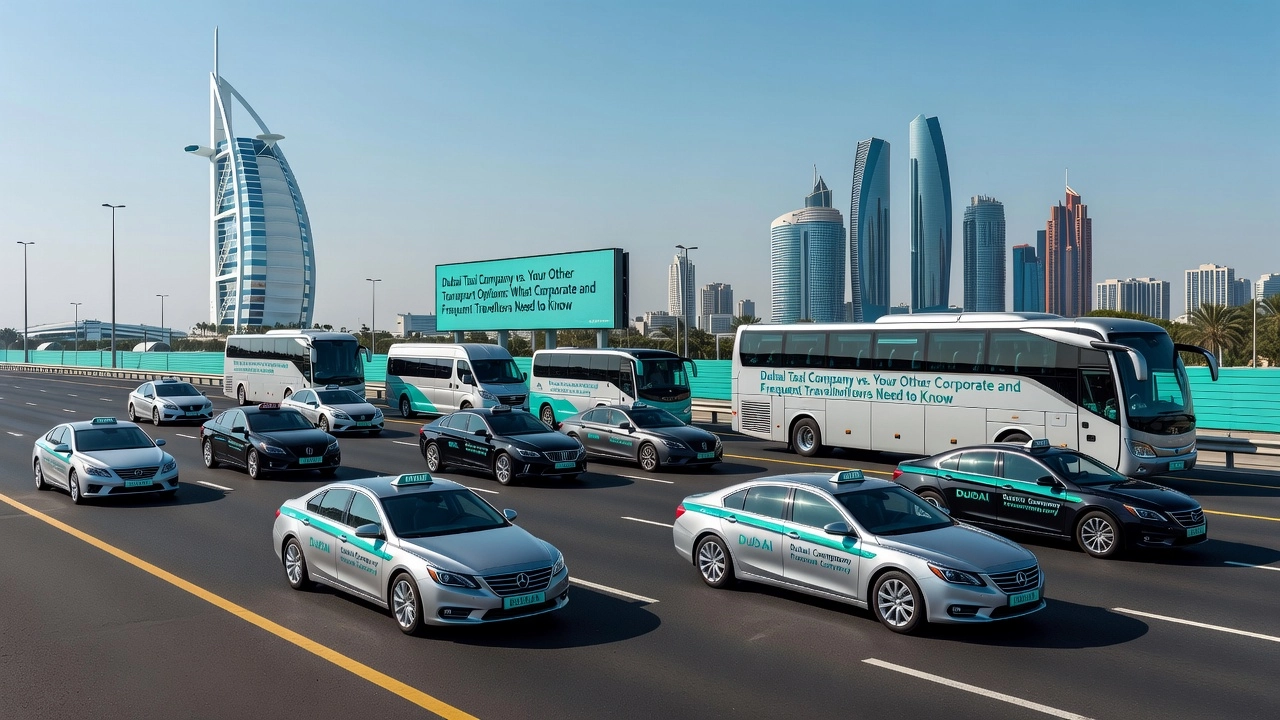

Getting around Dubai efficiently can make or break a business trip. With a sprawling city that never slows down, corporate travellers and frequent visitors face a genuine challenge when deciding how to move between meetings, airports, and hotels without wasting time or money.
The choice is rarely straightforward. Between ride-hailing apps, private car services, rental vehicles, and the official Dubai taxi company network, each option carries its own set of trade-offs that go far beyond simple pricing comparisons. Reliability, professionalism, safety standards, and billing convenience all factor into the equation when travel is happening on a company’s dime or on a tight schedule.
This guide breaks down every major transport option available in Dubai, examining how the regulated taxi network stacks up against its competitors across the metrics that matter most to business travellers. By the end, you will have a clear picture of which solution suits different travel scenarios, what hidden costs to watch for, and why your default choice might not always be your smartest one. The goal is simple: smarter decisions, fewer surprises.
Who Are the Main Dubai Taxi Companies Right Now?
Dubai’s transport landscape in 2026 is more structured and competitive than many visitors or corporate clients realise. Understanding who the key operators are, and how they differ, is essential before choosing the right service for your needs.
Dubai Taxi Company (DTC) stands as the dominant government-aligned operator in the market. Following its completed AED 1.45 billion acquisition of National Taxi, DTC now operates a combined fleet exceeding 9,500 vehicles, commanding approximately 59% of Dubai’s ride-hailing market and an estimated 12% share in Abu Dhabi. This makes DTC the single largest transport consolidator in the UAE, functioning less like a typical platform and more like a vertically integrated public utility with a private listing. Its service portfolio spans standard taxis, airport transfers, limousines, autonomous taxis, and specialised services for women and people of determination.
Careem, operating through its Hala platform in partnership with the RTA, has effectively become a digital extension of Dubai’s official public taxi network. Hala operates on metered RTA pricing with no surge charges, giving it a strong institutional position among daily commuters and residents. The Careem Plus subscription model further reinforces user loyalty by addressing pricing sensitivity directly.
Uber occupies the technology frontier of urban transport in the UAE. Its 2025 commercial launch of fully driverless robotaxi services in Abu Dhabi, with trial operations underway in Dubai, signals where personal urban mobility is heading. Uber applies dynamic pricing across its UberX, Comfort, and Black tiers, appealing primarily to tourists and flexible-budget riders.
GetRide (Royal Plus Transport) operates on an entirely different model. Rather than competing in consumer ride-hailing, GetRide focuses on B2B contract-based transport across Dubai, Abu Dhabi, Sharjah, RAK, Fujairah, Hatta, and Al Ain. This multi-emirate coverage, combined with fixed-rate contracts, addresses the pricing unpredictability that affects platform-based services.
The market context reinforces why all these operators matter. The UAE e-hailing market is projected at USD 0.36 billion in 2026, while the broader GCC ride-hailing sector is forecast to grow from USD 3.3 billion to USD 7.1 billion by 2032 at a 13.65% CAGR. Commercial transport already contributes over AED 8.4 billion annually to Dubai’s economy, supported by a 9% year-on-year rise in international overnight visitors in 2024. Structural government policy discouraging private vehicle ownership further sustains this demand across every operator category.
What Type of Transport Do You Actually Need?
Before selecting any transport provider, it is worth stepping back to identify precisely what category of transport service you actually require. The answer determines everything that follows, including which operator types are even relevant to your situation.
Consumer ride-hailing platforms are engineered for a specific purpose: connecting an individual passenger with an available driver, on demand, through a mobile app. That model works well for a personal trip to a restaurant or a spontaneous journey across the city. It does not work for a company needing to move 200 staff members between a residential cluster in Sharjah and a business park in Dubai every morning at 7:30am, with consolidated monthly invoicing, named drivers, and a service level agreement. Research into perceived risks in ride-hailing services confirms that reliability, pricing unpredictability, and safety accountability are primary user concerns, and these concerns are compounded many times over when an HR manager or procurement officer is responsible for an entire workforce rather than a single journey.
The buyer profile matters enormously here. A corporate fleet manager, a school transport coordinator, or an event logistics director is not the same buyer as a tourist hailing a cab from JBR. These institutional buyers require contracts, VAT-compliant invoicing, driver background verification to professional standards, and the ability to escalate service issues through a dedicated account manager, not a chatbot. Analysis of user behaviour in ride-hailing selection reinforces that consumer platforms are calibrated around individual decision-making factors such as price and wait time, not institutional procurement criteria.
Airport transfers represent a third and distinct category. With international overnight visitors to Dubai growing 9% year-on-year in 2024, demand for pre-booked, punctual airport transport has increased substantially. A consumer app can send a driver to the airport, but it cannot guarantee a meet-and-greet service, a fixed fare, or a vehicle waiting at arrivals when a flight lands 40 minutes late.
Inter-emirate journeys add another layer of complexity. Travel from Dubai to Abu Dhabi, Fujairah, Hatta, or Ras Al Khaimah falls outside the standard licensing and fare structures of urban taxi platforms. Only operators with multi-emirate authorisation and appropriate intercity fleet management, such as GetRide, can serve these routes reliably and within a structured pricing framework.
Finally, bulk event transport for conferences like GITEX, corporate retreats, or school excursions requires coordinated fleet deployment and dedicated account management. No consumer app currently offers this at scale.
The Pricing Problem: Fixed Rates vs. Surge and Dynamic Pricing
Pricing is where the comparison between app-based transport and contract-based operators becomes most consequential for business decision-makers. GCC ride-hailing research confirms that pricing sensitivity is a documented, measurable structural weakness across consumer platforms in the UAE. Fuel surcharges and dynamic surge pricing create unpredictable costs that are particularly acute during peak commuting hours, public holidays, and major events. Dubai hosts world-scale events throughout the year, including the Dubai Airshow, Gitex, and New Year’s Eve celebrations, meaning surge conditions are not occasional disruptions but recurring operational realities. For an individual passenger, an unexpectedly high fare is an inconvenience. For a corporate finance team processing hundreds of monthly transport claims, it is a reconciliation problem.
The emergence of subscription-based models is itself market evidence that consumers are pushing back against variable pricing. These products represent platforms responding to documented pricing sensitivity rather than solving the underlying structural issue. A subscription may smooth an individual employee’s monthly spend, but it does not provide a corporate finance department with pre-agreed per-trip rates, consolidated invoicing, or the predictable monthly budget line that expense reporting and forecasting require. Processing dozens of individual app receipts, each reflecting a different fare determined by real-time surge conditions, creates administrative friction that scales poorly as a company’s transport volume grows.
Contract-based pricing, as provided by operators such as GetRide, addresses this directly. Fixed per-trip rates are agreed before services begin, monthly transport budgets are established in advance, and consolidated invoices replace the volume of individual transaction records. This is the pricing model that corporate finance teams can actually work with. Academic analysis of surge pricing mechanics notes that dynamic pricing improves platform efficiency at a market level, meaning ride-hailing platforms have no structural incentive to eliminate it. The burden of managing its consequences falls entirely on the buyer.
For school transport, the case for fixed pricing is even more clear-cut. School runs operate on defined routes, fixed schedules, and consistent passenger lists. This operating profile is the structural opposite of the variable-demand environment that surge pricing is designed to manage. Families and school administrators require total monthly cost certainty for household and institutional budget planning. No subscription product delivers this; only a contracted fixed rate per route or per month provides the certainty that school transport procurement genuinely requires.
When evaluating any transport provider for ongoing corporate or institutional use, the first and most important question is whether pricing is pre-agreed and documented in a contract. What a standard metered or app fare looks like on a quiet Tuesday carries no relevance to what a company will actually pay at 8am on the first working day after a long weekend, or during any of the major business events that fill the Dubai calendar.
Coverage Beyond Dubai: Inter-Emirate and Multi-City Transport
Regulated taxi platforms operating under Dubai’s RTA framework are purpose-built for urban and metropolitan journeys. Their fare structures, licensing conditions, and service mandates are calibrated for in-city movement, not for the logistical reality of cross-emirate corridors. Routes such as Dubai to Abu Dhabi, Dubai to Fujairah, or journeys into Hatta and Ras Al Khaimah sit outside the operational design of standard urban taxi products. While Hala Ride has expanded its footprint to Fujairah as of late 2025, this represents intra-emirate coverage growth rather than a structured inter-emirate corridor service with fixed scheduling or predictable corporate pricing.
The Dubai to Abu Dhabi corridor carries some of the highest daily business travel volume in the UAE. Corporate commuters, client-facing teams, and staff transport requirements on this route are substantial and consistent. Consumer taxi apps address this demand inconsistently, often applying variable premium pricing that makes budget forecasting difficult for finance and operations teams. A private sedan transfer on this corridor through consumer-facing platforms can vary significantly depending on time of day, demand levels, and platform surcharges, creating exactly the cost unpredictability that businesses need to avoid.
GetRide operates scheduled and on-demand inter-emirate services covering all seven emirates, with daily services running on both the Dubai to Abu Dhabi and Abu Dhabi to Dubai corridors. This structured approach to route coverage and scheduling delivers reliability that urban taxi operators are simply not designed to match. For businesses managing staff across Sharjah, Abu Dhabi, and Dubai simultaneously, consolidating transport under a single contracted provider removes the overhead of coordinating multiple apps, reconciling variable invoices, and managing inconsistent service quality across different platforms.
City tours and managed destination transport round out GetRide’s multi-emirate offering, covering Abu Dhabi, Al Ain, and key UAE attractions. For corporate hospitality programmes and inbound visitor logistics, this matters considerably. Dubai’s international visitor numbers grew 9% year-on-year in 2024, sustaining strong demand for professionally managed transport tied to business events, executive visits, and tourism itineraries. A single provider handling both daily corridor services and destination transport delivers operational simplicity that fragmented, app-dependent arrangements cannot replicate.
Safety, Licensing, and What to Ask Any Transport Provider
Dubai’s transport sector operates under one of the most structured regulatory frameworks in the Middle East. The Roads and Transport Authority enforces compliance standards covering road safety, operational transparency, and fleet integrity. Operators that fail to meet these standards face heavy fines, vehicle impoundment, and licence suspension. For any business evaluating a transport provider, this regulatory architecture is not background information; it is the starting point for every procurement decision.
The Compliance Questions You Must Ask
When assessing any transport company for staff commuting or school transport, five questions are non-negotiable. Is the operator currently licensed under UAE transport authority frameworks with a valid operation card? Do drivers hold commercial licences with correct category endorsements, and are those endorsements current under the 2026 regulatory updates? Are drivers medically certified and professionally vetted before being assigned to routes? Are vehicles subject to documented periodic inspections covering brakes, tyres, lighting, and structural integrity? Is GPS tracking installed and actively connected to RTA monitoring systems rather than simply installed as a formality?
That last point matters more than most buyers realise. UAE school transport safety requirements for 2026 confirm that GPS units installed but not actively transmitting to RTA systems represent a recurring compliance failure, and schools that contract non-compliant operators carry shared legal liability for any resulting incident. The same accountability logic applies directly to corporate procurement teams.
Why Documentation Is Non-Negotiable
GetRide operates a modern, well-maintained fleet with experienced licensed drivers in full compliance with UAE transport regulations. For a company serving school children and corporate staff across routes connecting Dubai, Abu Dhabi, Al Ain, Sharjah, and beyond, these standards are operational prerequisites, not selling points.
The emergence of robotaxi trials in Dubai and commercially operational driverless services in Abu Dhabi signals genuine market evolution. For managed corporate routes and school transport in 2026, however, professionally supervised human-driven transport remains the standard for accountability, passenger reassurance, and regulatory clarity.
Any provider unable to produce licensing documentation, driver vetting records, and vehicle maintenance schedules should not be considered for ongoing contracts, regardless of price.
Side-by-Side: How the Main Options Compare for Business Use
A direct comparison across the criteria that matter most to business decision-makers makes the distinctions between these options immediately clear. Consumer-facing platforms are built around individual, on-demand journeys within urban Dubai. GetRide is structured around something fundamentally different: managed corporate transport, fixed contractual agreements, and multi-emirate operational coverage.
Corporate account management and consolidated invoicing present the first meaningful gap. While enterprise-tier products exist within larger platforms, they are primarily scaled toward major corporations and do not represent a standard accessible feature for small-to-mid-size businesses needing monthly invoicing, dedicated account oversight, and contractual accountability. GetRide addresses this through fixed contracts designed specifically for corporate clients, removing the administrative friction that comes with reconciling dozens of individual app-based transactions each month.
Pricing predictability is equally consequential. Consumer platforms operate on metered or dynamic fare structures, and surge pricing on app-based services can increase fares by 25% to over 200% during peak conditions. For any business managing a transport budget across recurring staff or client journeys, this variability creates genuine forecasting risk. GetRide’s contract model eliminates that exposure through pre-agreed fixed rates.
Inter-emirate route coverage is where urban taxi platforms reach a structural boundary. Corridors connecting Dubai to Abu Dhabi, Fujairah, Hatta, Ras Al Khaimah, and Sharjah fall outside the standard fare structures and operational mandates of RTA-regulated urban services. GetRide builds these routes into its core service offering as contracted, scheduled transport.
School transport and staff shuttle services require dedicated fleet allocation, vetted driver continuity, and fixed scheduling. App-based platforms match individual bookings to available drivers in real time; that model cannot support the structured, recurring commitments that school runs and daily staff commutes demand. GetRide operates dedicated service lines for precisely these requirements, giving businesses consistency that on-demand platforms are not designed to provide.
When a Contract Transport Provider Outperforms a Taxi App
For organisations managing daily staff commuting across fixed routes and recurring pickup points, the structural difference between a contracted provider and an app-based platform is not a matter of preference. It is a matter of operational design. App platforms assign a different driver on every dispatch with no route memory, no service continuity, and no accountability to your internal schedule. A contracted provider like GetRide assigns dedicated vehicles and drivers to your specific runs, meaning your staff experience consistent pickup times, familiar drivers, and a service level that is agreed in writing rather than dependent on driver availability at the moment of booking.
School transport makes this distinction even sharper. Moving students requires verified drivers, fixed and documented routes, appropriate vehicles, and safety protocols that meet regulatory standards. These are not features you can layer onto a consumer taxi app. They are foundational requirements that define a purpose-built school transport service. GetRide’s school transport offering is built around exactly these requirements, with verified drivers and structured routes that provide the accountability parents and institutions need.
For corporate airport transfers, the case for pre-booked fixed-rate transport is reinforced by the scale of Dubai’s international traffic. With a 9% year-on-year increase in international overnight visitors to Dubai recorded in 2024, peak arrival windows at major airports generate transport demand that app availability cannot reliably absorb. A meet-and-greet service with a confirmed vehicle and a fixed rate removes that uncertainty entirely, which is why contracted airport transport has become the professional standard for managed travel programmes.
Businesses operating across multiple UAE emirates face an additional complexity. GetRide covers Dubai, Abu Dhabi, Sharjah, Ras Al Khaimah, Fujairah, Al Ain, and Hatta under a single service relationship, producing one invoice and one point of accountability rather than separate app accounts and inconsistent standards across providers.
The broader market direction supports this model. GCC transport research consistently identifies corporate accounts, airport transfers, and government clients as the highest-growth B2B segments through the forecast period. This is the direction professional transport procurement is moving across the region, and contract-based providers are structurally positioned to serve it.
Choosing the Right Dubai Transport Partner for Your Needs
Dubai’s transport market is consolidating rapidly around dominant consumer platforms, but consolidation does not automatically mean every transport need is best served by those platforms. For spontaneous, on-demand journeys within Dubai city limits, Dubai Taxi Company and Careem remain practical, widely available choices with strong app infrastructure and broad fleet coverage. These platforms are optimised for individual, per-trip convenience.
For organisations with structured, recurring transport requirements, the calculus changes entirely. Corporate shuttle programmes, school runs, staff commutes across fixed routes, inter-emirate travel, and airport transfers requiring predictable budgeting all demand something consumer apps are not built to deliver: fixed pricing, consolidated invoicing, dedicated fleet allocation, and account management.
This is precisely where a dedicated B2B transport partner like GetRide offers a structurally better fit. GetRide operates across Dubai, Abu Dhabi, Sharjah, Ras Al Khaimah, Fujairah, Al Ain, and Hatta, providing the multi-emirate coverage that app-based platforms cannot reliably guarantee.
Before defaulting to a taxi app for your organisation’s transport needs, apply three diagnostic questions. First, is pricing fixed or subject to surge? Second, does provider coverage extend to every emirate where your business or school operates? Third, can the provider issue VAT-compliant consolidated invoices and maintain a dedicated fleet for your specific routes?
If any answer is uncertain, a contracted transport provider is the more appropriate solution. Contact GetRide to request a fixed-rate transport quote for your team, school, or corporate travel programme, covering all UAE emirates.
Conclusion
Choosing the right transport in Dubai comes down to understanding your priorities. The regulated Dubai taxi company network delivers consistency, professional standards, and straightforward corporate billing that ride-hailing apps simply cannot match at scale. Private car services offer premium comfort for high-stakes client meetings, while rental vehicles suit only those with extended stays and flexible schedules.
For most corporate and frequent travellers, the smartest approach combines options strategically rather than committing to one solution exclusively.
Start by auditing your typical Dubai itinerary. Identify which journeys demand reliability, which require flexibility, and where budget matters most. Then build your transport strategy around those realities rather than habit or convenience.
Dubai rewards travellers who plan ahead. Make your next business trip faster, smoother, and more cost-effective by choosing the right vehicle for every leg of the journey.