
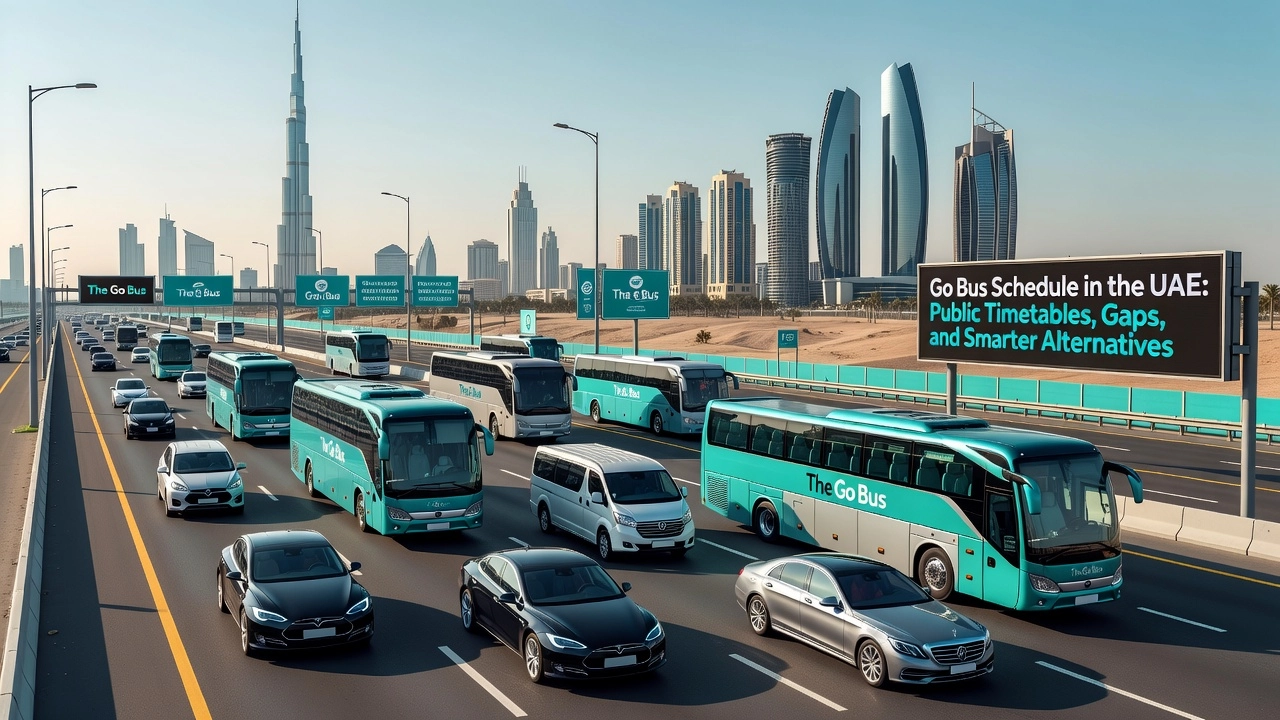

Getting around the UAE without a car can feel overwhelming, especially if you are new to the country and still figuring out the public transport system. Whether you are a resident trying to commute on a budget or a visitor exploring the region, understanding the go bus schedule is one of the first steps toward navigating the UAE with confidence.
The Go Bus network connects several key emirates, offering an affordable way to travel between cities. However, like any public transport system, it comes with its own set of limitations, including gaps in coverage, limited frequency, and routes that do not always align with your destination or timing.
In this guide, we will walk you through everything a beginner needs to know. You will learn how the Go Bus timetables work, where the service tends to fall short, and what smarter alternatives are available when the bus simply does not fit your schedule. By the end, you will have a clear picture of your transport options and be better equipped to plan your journeys across the UAE.
Official UAE Public Bus Schedules: What the Data Shows
Before diving into UAE bus timetables, one important clarification is worth noting upfront. Searching for “go bus schedule” online may return results for Go Bus New Zealand, a private coach company founded in 1930, or Go Bus Egypt, established in 1998 in Cairo. Both are entirely separate organisations with no connection to UAE public transport infrastructure. This guide focuses exclusively on official UAE bus services.
Ajman Transport Authority: Intercity Routes from Al Musalla
The Ajman Transport Authority publishes fixed intercity bus schedules for routes departing from Al Musalla station. Two intercity corridors are currently listed, both priced at a flat AED 35 per trip, payable by cash or Masar card.
The Al Ain line offers four daily departures: 08:00, 12:00, 16:00, and 20:00. These four-hour intervals spread travel opportunities across the full day, giving passengers some flexibility when planning their journey.
The Abu Dhabi line, however, provides only two daily departure slots: 07:00 and 11:00. For one of the UAE’s most heavily travelled intercity corridors, this limited frequency creates a significant gap for commuters who miss these narrow windows.
Abu Dhabi Mobility: A Broader Network
For travellers based in or travelling through Abu Dhabi, Abu Dhabi Mobility operates a much wider service network, covering standard city and suburban routes, inter-city services, inter-emirate connections, on-demand travel via AD Link, Green Bus, and Express routes.
Timetables for all these services are accessible through the Darbi App, available on the App Store, Google Play, and Huawei App Gallery, as well as through Google Maps. For passengers new to UAE public transport, the Darbi App serves as the most practical starting point for planning any Abu Dhabi area journey.
The Real Problems With Public Bus Schedules in the UAE
Understanding the official go bus schedule data reveals a clear picture, but it only tells part of the story. The real question for UAE commuters is whether public bus services are actually practical for daily use. Here are five significant problems that affect anyone relying on the public network.
1. Departure Windows Are Extremely Narrow
The Ajman Transport Authority offers just two daily departures to Abu Dhabi (at 07:00 and 11:00) and four daily departures to Al Ain (at 08:00, 12:00, 16:00, and 20:00), all from Al Musalla station. Missing the 07:00 bus means waiting four full hours for the next slot. For workers on fixed shift schedules, this creates an almost impossible situation. There are no midday Abu Dhabi options, and after 11:00, the route is simply unavailable for the rest of the day.
2. No Door-to-Door Service
Every public intercity route begins and ends at a fixed terminal. Passengers arriving at Al Musalla station still need to arrange onward transport to their actual destination, adding extra cost and travel time at both ends of the journey. This terminal-only model works for occasional travelers but becomes a serious burden for daily commuters.
3. Schedules Can Be Suspended Without Warning
Government-coordinated services carry real continuity risk. In March 2026, RTA suspended intercity bus services to Sharjah and Ajman due to severe weather, advising passengers to seek alternative arrangements immediately. Similarly, UAE school bus services were suspended and only officially resumed on April 20, 2026, following assessment by NCEMA and the Ministry of Education. These incidents demonstrate how quickly a published schedule can become irrelevant.
4. No Corporate or Fleet Management Features
Public bus contracts offer no corporate billing accounts, no dedicated vehicle allocation, and no fleet management dashboards. Every ticket is purchased individually at a retail level. For businesses managing daily staff commutes across multiple locations, this model is simply not functional. Companies need predictable, managed solutions that the public network cannot provide.
5. Digital Tools Do Not Guarantee Reliability
Abu Dhabi Mobility promotes the Darbi app and Google Maps for timetable access, which is a useful starting point. However, viewing a scheduled time is not the same as receiving a punctuality guarantee. No public bus authority in the UAE publishes formal on-time performance commitments or service level agreements for individual passengers. The schedule shown in an app reflects planned times; what actually happens on the road is a separate matter entirely.
For commuters and businesses who need dependable, flexible transport across the UAE, these gaps point clearly toward purpose-built private solutions like those offered by GetRide.
Why UAE Commuters and Businesses Choose Private Transport Instead
Given the gaps in public bus coverage documented in the previous sections, it is no surprise that UAE commuters and businesses are increasingly turning to private transport providers. The reasons go well beyond convenience. They reflect a structural mismatch between what fixed public schedules can deliver and what modern UAE life actually demands.
1. Scheduling That Works Around You
Public intercity buses in the UAE operate within rigid timetables offering as few as two or four daily departure slots. If your work shift starts at 6:00 AM or your flight lands at 11:30 PM, those fixed windows simply do not work. Private operators like GetRide build departure times around actual operational needs, whether those involve rotating staff shifts, airport pickups, or event timings. That flexibility alone eliminates the stress of missed connections and unplanned waiting time.
2. Door-to-Door Service Removes Hidden Costs
Taking a public bus typically means arranging secondary transport to reach the stop and then again at the destination. These added trips increase both total travel time and overall cost. Private door-to-door pickup addresses both problems in a single booking, making the true cost comparison far more competitive than the headline ticket price suggests.
3. GPS Tracking and Driver Accountability
The regional shift toward smart transportation systems with real-time tracking is reshaping commuter expectations. Private operators using GPS-monitored fleets can provide measurable punctuality commitments to corporate clients. Public networks, by contrast, cannot offer that level of per-journey accountability to individual businesses.
4. Comfort Standards That Match the Climate
In a country where summer temperatures exceed 40°C regularly, air-conditioned coaches with assigned seating are a functional necessity. Standing-room public buses during peak hours cannot deliver the same standard. GetRide’s modern, well-maintained fleet ensures every passenger travels in genuine comfort.
5. Simplified Corporate Billing
HR and procurement teams benefit significantly from consolidating all staff transport under a single provider. Corporate billing accounts, dedicated fleet management, and structured contracts replace fragmented individual journeys with a single trackable spend line. Dubai’s RTA smart bus pooling service has already surpassed 193,000 passengers, signalling strong latent demand for pre-booked, organised transport solutions, which private operators are far better positioned to fulfil at a corporate level.
6. Growing Pressure on Public Networks Through 2031
UAE transportation infrastructure investment is forecast to expand continuously through 2026 to 2031, driving higher commuter volumes across all emirates. As population and business activity grow, already-limited public bus capacity will face greater strain. Private providers that establish reliable corporate and individual transport relationships now will be well placed to absorb demand that public networks cannot serve.
GetRide operates across Dubai, Abu Dhabi, Al Ain, Sharjah, Ras Al Khaimah, Fujairah, and Hatta, covering a geographic breadth that no single public bus operator currently matches in the UAE.
GetRide Daily Bus Service: Routes, Times, and Emirate Coverage
For commuters and businesses ready to move beyond the limitations of fixed public timetables, GetRide offers a practical, professionally managed alternative built around the routes that matter most in the UAE.
1. Daily Dubai to Abu Dhabi Service on the UAE’s Busiest Corridor
GetRide operates a daily intercity service connecting Dubai and Abu Dhabi in both directions, addressing the single most in-demand commuter corridor in the country. This route serves thousands of residents and professionals who travel between the two emirates for work, business meetings, and daily commitments. Unlike public operators that offer only a handful of fixed departure slots each day, GetRide structures its service to align with genuine commuter demand, providing a dependable option for those who cannot afford to miss a connection.
2. Seven-Emirate Coverage Under One Service Agreement
GetRide’s geographic footprint spans Dubai, Abu Dhabi, Al Ain, Sharjah, Ras Al Khaimah, Fujairah, and Hatta. No single public transport authority in the UAE covers this full range under one unified service agreement, as public networks are divided across five separate government bodies with limited coordination between them. For businesses operating across multiple emirates, working with a single transport provider simplifies logistics, billing, and communication considerably.
3. Specialised Service Categories for Every Travel Need
Beyond intercity routes, GetRide delivers staff transportation, corporate shuttle services, school transport, event transportation, airport transfers, and city tours. Each category is managed by experienced drivers familiar with the relevant routes and requirements. Whether arranging an airport pickup for a visiting executive or coordinating daily school runs, clients receive consistent, professional service across all bookings.
4. A Modern, Well-Maintained Fleet You Can Rely On
GetRide’s vehicles are regularly maintained, roadworthy, and operated by qualified professional drivers. This matters practically because a vehicle that breaks down mid-route or runs late creates real consequences for businesses and individuals alike. A reliable fleet backed by experienced drivers means clients can plan their schedules with confidence.
5. Customised Routes and Pickup Times Built Around Your Schedule
Perhaps the most significant advantage GetRide offers over any published government timetable is flexibility. Pickup zones and departure times can be tailored to a client’s specific operational requirements, whether that means early morning factory runs or staggered corporate drop-offs across different locations. This level of customisation is simply unavailable through standard public bus networks, making GetRide a genuinely practical solution for businesses seeking transport that works around them rather than the other way around.
How to Book a GetRide Bus: Step-by-Step
Booking a GetRide bus is straightforward, even if you have never arranged private coach transport before. The process is designed to be simple, flexible, and fully confirmed before you ever leave your door.
Step 1: Choose Your Route and Travel Date
Start by identifying your origin emirate, your destination, and your preferred travel time. Be clear about the nature of your journey: is this a single one-way trip, a daily commute between Dubai and Abu Dhabi, or a recurring corporate booking for a team of staff? Having this information ready before you make contact will make the entire process faster and ensure you receive the most accurate quote.
Step 2: Contact GetRide via WhatsApp, Website, or Phone
Reach out to GetRide through WhatsApp, the website enquiry form, or by phone. When you get in touch, provide your route details, the number of passengers travelling, your preferred pickup location, and any special requirements. These might include extra luggage capacity, accessibility needs, or a particular departure window that fits your schedule.
Step 3: Confirm Your Pickup Point
Once GetRide receives your enquiry, the team will advise the most convenient pickup zone for your location. Depending on your service type, door-to-door collection can also be arranged, removing the need to travel to any fixed terminal.
Step 4: Receive Your Booking Confirmation
Before your departure date, you will receive written confirmation covering your full trip details, assigned driver information, and vehicle specifics. This gives you complete clarity and peace of mind ahead of travel.
Step 5: Board and Travel
On the day, a GPS-tracked, air-conditioned vehicle arrives at the confirmed location and time. There is no queuing at a public terminal and no uncertainty about whether the service is operating. Unlike the limited public departure slots covered in earlier sections of this guide, your GetRide booking is a dedicated, confirmed journey from start to finish.
Corporate and Staff Transport: A More Reliable Alternative to Public Buses
For companies managing staff across Dubai, Abu Dhabi, Sharjah, and beyond, public bus networks create a structural challenge that goes beyond inconvenience. No single public operator covers all seven key UAE emirates under one contract, which means businesses either juggle multiple transport agreements or accept that employees will face inconsistent, fragmented service on their daily commute. This operational gap directly affects punctuality, staff morale, and ultimately, business performance.
A private staff transport contract with GetRide resolves this fragmentation at the source. Rather than coordinating with multiple agencies across different emirates, companies work with a single provider, receive one consolidated invoice, and communicate through one dedicated operations contact. This simplicity matters significantly for HR and facilities teams who need predictable, manageable transport logistics without administrative overhead.
GetRide’s fleet also provides something public bus timetables fundamentally cannot: verifiable accountability. GPS tracking on every vehicle gives HR and facilities managers real-time data on departure times, route adherence, and arrival records. If a question arises about whether a vehicle was on time or on route, the answer is documented and accessible. Public bus operators do not provide this level of reporting, which makes performance monitoring nearly impossible for employers.
The business continuity argument became very concrete in April 2026, when UAE school bus services were suspended without a fixed resumption date, with updates promised only through official channels. School bus services ultimately resumed on Monday, April 20, 2026, following assessment by NCEMA in coordination with the Ministry of Education. For employers, this is a useful analogy: any reliance on government-coordinated transport schedules carries service continuity risk that falls on the employer when disruption occurs.
GetRide’s corporate shuttle and staff transport services are built specifically for this B2B environment. The service includes flexible scheduling, professional drivers, and the ability to scale vehicle capacity up or down as headcount changes. Whether a company needs daily multi-route commuting across several emirates or a dedicated shuttle for a single site, the solution adapts to operational requirements rather than forcing the business to adapt to a fixed public timetable.
Making the Right Transport Choice for Your UAE Commute
Public bus schedules across the UAE serve a genuine purpose for budget-conscious travellers who can align their plans with fixed departure windows. At AED 35 per trip and a handful of daily slots, they offer an affordable baseline. However, the structural gaps are difficult to overlook: only two daily Ajman to Abu Dhabi departures, fixed stops with no door-to-door flexibility, and real service continuity risks as demonstrated by the Abu Dhabi Rabdan Bus Interchange closure in April 2026.
For daily commuters, corporate teams, and anyone who cannot afford to miss a departure window, a private transport provider covering all seven target emirates under one service agreement is a measurably better option. Flexibility, punctuality, and dedicated vehicles are not luxuries in a working environment; they are operational necessities.
GetRide delivers daily Dubai to Abu Dhabi service, comprehensive multi-emirate coverage, and corporate contracts structured around your schedule rather than a government timetable. Every journey is planned around your requirements, not fixed around available slots.
Contact GetRide today via WhatsApp, the website, or phone to discuss your route, request a personalised quote, and experience professional transport that moves entirely on your terms.
Conclusion
Navigating the UAE without a car is entirely possible once you understand your options. The Go Bus network offers an affordable and reliable way to travel between emirates, but knowing its timetables, coverage gaps, and frequency limitations puts you in control. When the schedule does not align with your needs, smarter alternatives like ride-hailing apps, intercity taxis, and private transport services can fill the gap seamlessly.
The key is combining the right tools for the right journey. Do not rely on a single solution when the UAE offers a growing range of transport choices.
Start by bookmarking the official Go Bus schedule, planning your route in advance, and identifying your backup options before you travel. Whether you are commuting daily or exploring a new emirate, a little preparation goes a long way. Your next journey starts with knowing exactly what is available to you.